
Oakham Wealth | The Evolving B Corp Journey
Share this page
Business as a force for good
It’s been three years since Oakham Wealth first became a Certified B Corporation, joining a movement originally born in the US but now thriving in the UK to a remarkable degree. Back in 2022, there were around 600 B Corps in Britain and 4,500 worldwide. Today, those figures have swelled to over 2,600 in the UK and more than 10,000 globally. This means the UK community is the second largest and fastest growing B Corp hub on the planet. For a nation of our size, that’s extraordinary.
The UK has embraced this US originated movement disproportionally, accounting for nearly a quarter of all global certifications and hosting some of the most active financial, professional, and creative B Corps. Awareness of the certification has also exploded: more than half of the British public (51%) now recognise the B Corp mark.
Why We Became a B Corp
Balancing profit with purpose
Originally, Oakham’s motivation was straightforward: to become a better business, one that balances the pursuit of profit with a broader responsibility to people and the planet.
The process, run by B Lab UK, involved an exhaustive assessment of every aspect of our operations, governance, environment, client relationships, community impact, and employee wellbeing. It was a demanding but energising exercise, more akin to a top-tier management consultancy review, without the consultant’s bill.
Becoming a B Corp made us examine our business from every angle. How inclusive were we really? How rigorous were our supply choices? Were our governance practices living up to the values we claimed? The process presented ideas and opportunities that would otherwise never have surfaced.
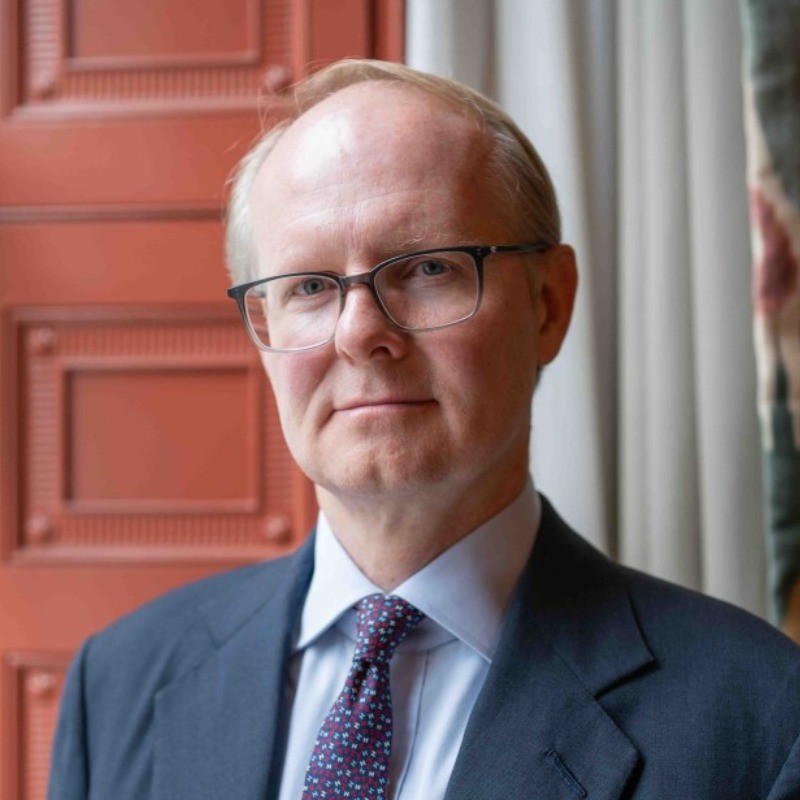
Paul Denley
Chief Executive, Owner & Co-Founder
Oakham Wealth Management Ltd
The Benefits Along the Way
Culture, recruitment, and resilience
Over three years as a B Corp, the benefits have been both tangible and cultural. Oakham’s renewed certification this year resulted in an improved B Impact score, marking measurable progress across governance, environmental, and community criteria.
The cultural benefits have been no less important:
- Recruitment: B Corps have become magnets for top talent. Purpose driven professionals actively seek out employers aligned with their values.
- Retention: Employee wellbeing has improved, supported by our living wage commitment and a greater sense of shared mission.
- Resilience: Clients and stakeholders respond positively to the transparency and accountability the certification demands.
Being a B Corp has influenced every business decision, from supply chain management to investment selection, from internal governance to charitable partnerships. It has become not an overlay but an operating philosophy. Questions such as “Does this align with our B Corp commitments?” are now routine across all discussions, from boardroom strategy to daily operations.
Progress and Renewal
The three year reassessment
Every three years, B Corps face recertification. It’s not a one‑off badge of virtue, it’s an ongoing test of improvement. During our recent renewal, B Lab’s independent verification confirmed steady advances in employee engagement, responsible procurement, and sustainability reporting.
The increase in score represents deeper operational maturity and stronger accountability. Oakham has also formalised a supply chain code of conduct, enhanced client communication on sustainability, and supported staff volunteering in community finance education.
The Wider B Corp Momentum in 2025
A model reshaping capitalism
Across the UK economy, B Corps significantly outperform conventional businesses. In 2023-2024, certified companies have recorded average revenue growth of 23%, compared with a national benchmark of 17%. They’re also 25% more likely to pay a living wage, and 100% more likely to use renewable energy exclusively. Collectively, the UK’s B Corps now generate more than £30 billion in turnover and employ over 150,000 people.
The ethos that underpins this success – that business should serve all stakeholders, not just shareholders – has begun to reshape expectations of corporate purpose. Even in the financial services sector, once the bastion of narrow shareholder primacy, firms are proudly part of the community.
Strategic Sustainability
Leadership, values, and the long view
When Oakham began this transition, we re‑examined leadership itself. The old “command and control” model belongs to another era. Today’s best leadership is conversational, collaborative, and grounded in values. It’s about influence through dialogue, not direction through decree. B Corp values offer a framework for that culture – one where innovation, inclusion, and long‑term stewardship go hand in hand.
As a wealth manager, our mission is to preserve and grow our clients’ assets. Doing so responsibly is both sound ethics and sound economics: sustainable investments are ultimately the only ones with enduring value. Growing wealth by damaging the world that sustains it is self defeating.
The Future of Better Business
Profit with principle
The world has moved beyond Milton Friedman’s 1970s notion that business’s only responsibility is to shareholders. The B Corp movement marks the next stage in the evolution of capitalism – one that aspires to make money well, not merely make more of it.
For Oakham, being a B Corp is not a marketing statement but a strategic compass. It has made us more reflective, more transparent, and more accountable. Each decision – each investment, hire, or partnership – is now filtered through the lens of purpose, to ensure that success is shared across all stakeholders.
Three years in, the experience has proved that blending profit with purpose isn’t idealistic. It’s simply good business.